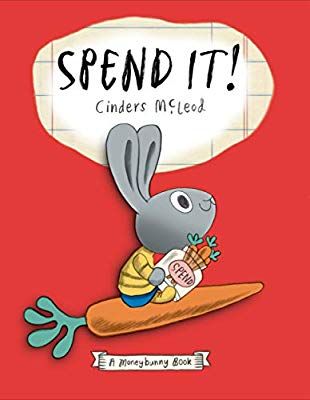
This book is great for ages 5-8 years old. In “Spend It!” an enthusiastic boy bunny, named Sonny, wants to buy everything. Can he? No! Will he have to make some choices? Yes!
In this well-written paperback book, young Sonny wants to buy a toy rocket, pogo stick, and his very own bouncy castle. There’s a problem .. his allowance is only 3 carrots. And to add to this, he wants to only spend, not save. His patient mother walks him through steps to help him make a wise choice and soon, he is a smart, happy spender!
Just like Sonny, children that read “Spend It!” will turn into happy, spending bunnies!
Did you know you can put money into an account and watch it grow over time? That’s what happens when you invest your money. There are things that you can invest money is such as stocks, bonds, and real estate. To understand how this works, we need to go over some investing words.
Brokerage Account
The kind of account your parents can open for you so that you can invest your money is called a brokerage account.
Stocks
A stock is a very small part of a company. When you buy stock in a company, you own a tiny piece of that company. Why would you buy stocks? When you put your money into a successful company, your money will grow, too.
Bonds
A bond is a loan from an investor to a borrower, such as a company or government. Why would you lend money to the government? For example, the government needs to build roads or parks. When you help by loaning money, the government pays interest to you in return.
Real Estate
Investing in real estate is when you own properties or land.
How does investing work?
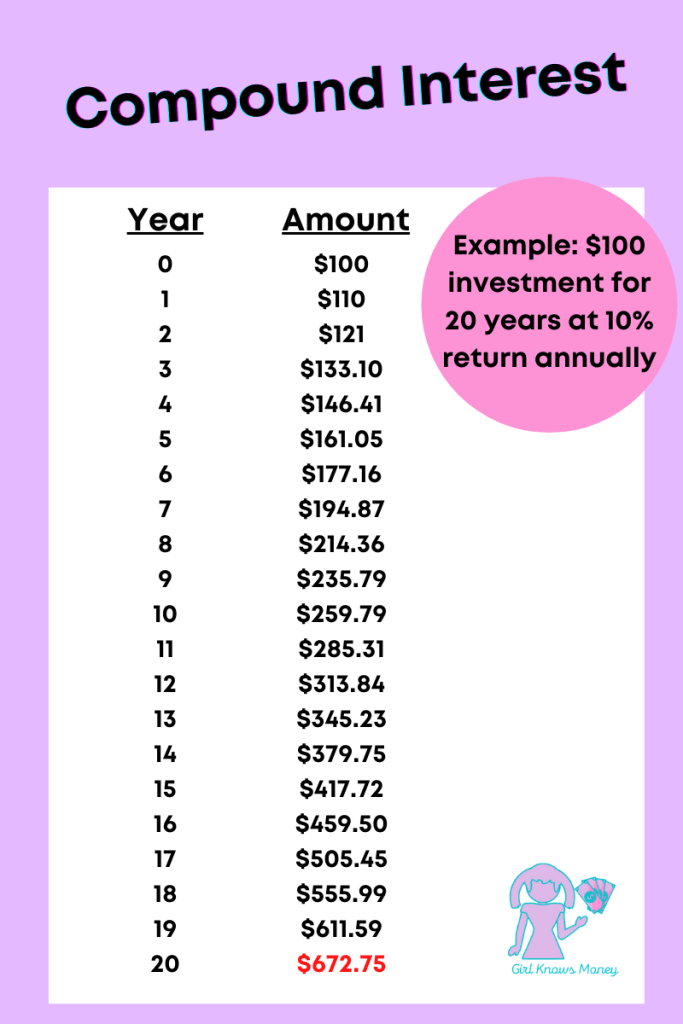
When you put your money in these places, this is the act of investing. On yearly average, the stock market gives a return of 10% annually. Are you good at math? Well, let’s say you make a one-time investment of $100 into a stock. Over 20 years you could expect to make $672.75! All because you made one investment!
How did this happen? By compound interest. After year one, your $100 becomes $110. After year two, your $110 becomes $122.10. And this continues every year, as long as you don’t take any money out of your investment!
How much money do you need and when do you start?
You probably want to know when you should start investing? Well, I’ll give it to you nice and simple: right now! The earlier you start investing, the more time your money has to grow! Compound interest shows us this is true.
Now you might be wondering how much money you need to start investing? Some people say you need to be rich to start investing, but note this: that couldn’t be farther from the truth! You don’t! You can start simply by investing in smaller, cheaper stocks just to begin learning.
Who should invest you might be asking yourself? Well, please hear me when I say, it isn’t just for grown ups in tight fitting suits! Anyone can and should invest, including you!
You’ve made some money from a super cool job you started. Now what? Do you spend it all on one thing you’ve been dying to purchase? Should you save some of your “paycheck”? The answers to these questions can be found in a budget.
What’s a Budget?
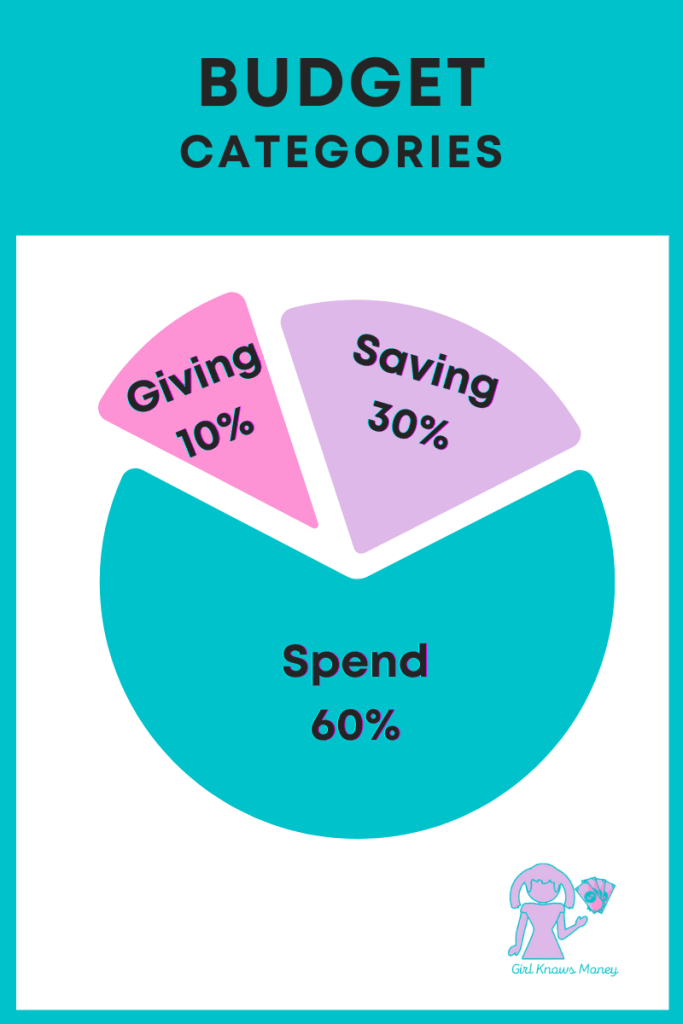
A budget is a way for you to organize how you spend your money. It’s probably not smart to spend every dollar you make, and it might not be fun having to save all of it either. Below is a budget that’ll help keep your money balanced. There are three categories for you to place your money into. My parents and I came to an agreeable percentage for each. Talk with your dad or mom about what percent you feel comfortable using for your categories.
Category 1: Give/Charity (10%)
Category 1 is the giving category. It’s always a great idea to include a portion of your money to give back. Personally, my giving goes to my church as tithe. Maybe you would like to give to your local animal shelter or goodwill or your church, too?
Category 2: Save (30%)
Category 2 is the saving category. While it may seem fun at the time to spend all your money, it’s a good rule of thumb to be sure and save for a larger goal. This could be your first car or the beginning of college savings.
Category 3: Spend (60%)
Category 3 is the spending category. This is your fun money for anything! Shopping, new pet treats, yummy treats for yourself. The list is endless!
You can head over to my Printables page to get your own Budget Worksheet!
What do you love to do? Maybe you love to paint, build, organize, or care for others? I’ve brainstormed some fun business ideas to help you start making money!
Use your Skills!
Wanna design? Design lockers! Ask someone what he or she likes and use that!
Like reading? Host a fun reading hour at your house for little kids and tell their parents that you`ll provide snacks!
Wanna create something pretty? Put up a fun jewelry stand! Or start an Etsy shop.
Are you physically active? Teach a sport that you know and like!
Like to cook? Make a homemade lemonade/ treat stand.
Do you have a ton of lovies or siblings with favorite babies? Make little accesories for stuffed animals!
Are you really smart at school? Become a tutor for your classmates.
Are you into helping the Earth? Pick up your neighbor’s recyclables each week.
I hope some of these ideas help you! Comment below with your own ideas and ways you are making money.
Looking for ways to earn money around your home? I’ve come up with a few chore ideas!
Chore Charts Ages 6-8
Morning Chores: – Make your bed – Do you have a pet? Well, give them some fresh food and water! (Leave the litter box to the big kids!) – Before you have breakfast, go ahead and put out napkins and any silverwear that is needed! – After breakfast, wipe down the table and put up cereal (or any breakfast foods that need to be put up).
Afternoon Chores: – Fold laundry and put away. – Ask your parents for an all-natural spray cleaner (we like a vinegar and water solution) and wipe down your bathroom counter and sink.
Evening Chores: – Set the dinner table (napkins and silverwear). – After dinner wipe down the dinner table.
Weekend Chores – Pick up sticks so the lawn can be mowed. – Rake leaves in the fall.
Chore Charts Ages 9-11
Morning Chores – Make your bed – Help with the animals, too! Clean the litter box or hamster cage. – Before you have breakfast, go ahead and put out bowls, plates, and cups. – After breakfast, rinse and load the dishwasher (help put away high shelved food items).
Afternoon Chores – Fold laundry and put away. – Vacuum or sweep main living areas (kitchen and living room). – Possibly unload dishwasher.
Evening Chores – Set the dinner table (plates); make fresh waters for everyone. – Rinse and load dishwasher.
Weekend Chores – Pick up sticks so the lawn can be mowed. – Rake leaves during the fall. – Help keep the garage organized.
I hope you like some of these chore ideas. You can head over to my Printables page and print off these charts!
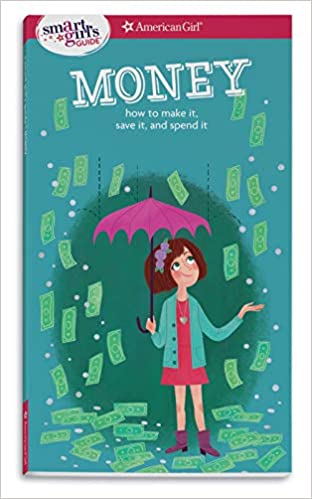
Even though I am not a big fan of American Girl dolls, I am a big fan of this book, which is hard covered and stores a lot of good tips and tricks for making, saving, and spending money! The book talks directly to the reader, which makes it feel like you are right there with a person talking to you. This book is also equipped with short and sweet quizzes that see what kind of shopper you are, how gullible you are, and other money- like ideas that let you see how you and money cooperate in different ways. A quiz that I really enjoyed and that was well made was called Spending Spree.
Chapter CheckUp
In this book there are 5 chapters, each made up by 10 or less sections. Quizzes follow each chapter. The chapters are marked as the following:
Money!Money?
Making Money
Let`s Go Shopping!
Saving Money
Rich? Rich!
101 Moneymaking Ideas
One thing I found helpful is how they explain the difference between credit cards and debit cards. They explain it in a way that makes it seem like, “Wow! I didn’t know that it was so simple!”
The quizzes were my favorite part. One of the quizzes is called ‘What kind of shopper are you?’. At the end of the quiz you are gently corrected on things that might make you stumble. They list questions for you to ask yourself before making certain purchases. And, the difference between needs and wants is explained. Of course we may know the differences already, but this is a great reminder for us all! I stumble across needs and wants all the time, and I have to make way for the wise girl in my head.
Overall, I believe American Girl: Money was quite informative. I learned some new terms and will use their guide for making better purchases.
This is an example post, originally published as part of Blogging University. Enroll in one of our ten programs, and start your blog right.
You’re going to publish a post today. Don’t worry about how your blog looks. Don’t worry if you haven’t given it a name yet, or you’re feeling overwhelmed. Just click the “New Post” button, and tell us why you’re here.
Why do this?
Because it gives new readers context. What are you about? Why should they read your blog?
Because it will help you focus your own ideas about your blog and what you’d like to do with it.
The post can be short or long, a personal intro to your life or a bloggy mission statement, a manifesto for the future or a simple outline of your the types of things you hope to publish.
To help you get started, here are a few questions:
Why are you blogging publicly, rather than keeping a personal journal?
What topics do you think you’ll write about?
Who would you love to connect with via your blog?
If you blog successfully throughout the next year, what would you hope to have accomplished?
You’re not locked into any of this; one of the wonderful things about blogs is how they constantly evolve as we learn, grow, and interact with one another — but it’s good to know where and why you started, and articulating your goals may just give you a few other post ideas.
Can’t think how to get started? Just write the first thing that pops into your head. Anne Lamott, author of a book on writing we love, says that you need to give yourself permission to write a “crappy first draft”. Anne makes a great point — just start writing, and worry about editing it later.
When you’re ready to publish, give your post three to five tags that describe your blog’s focus — writing, photography, fiction, parenting, food, cars, movies, sports, whatever. These tags will help others who care about your topics find you in the Reader. Make sure one of the tags is “zerotohero,” so other new bloggers can find you, too.










 Girl Knows Money